What is AI Operations?
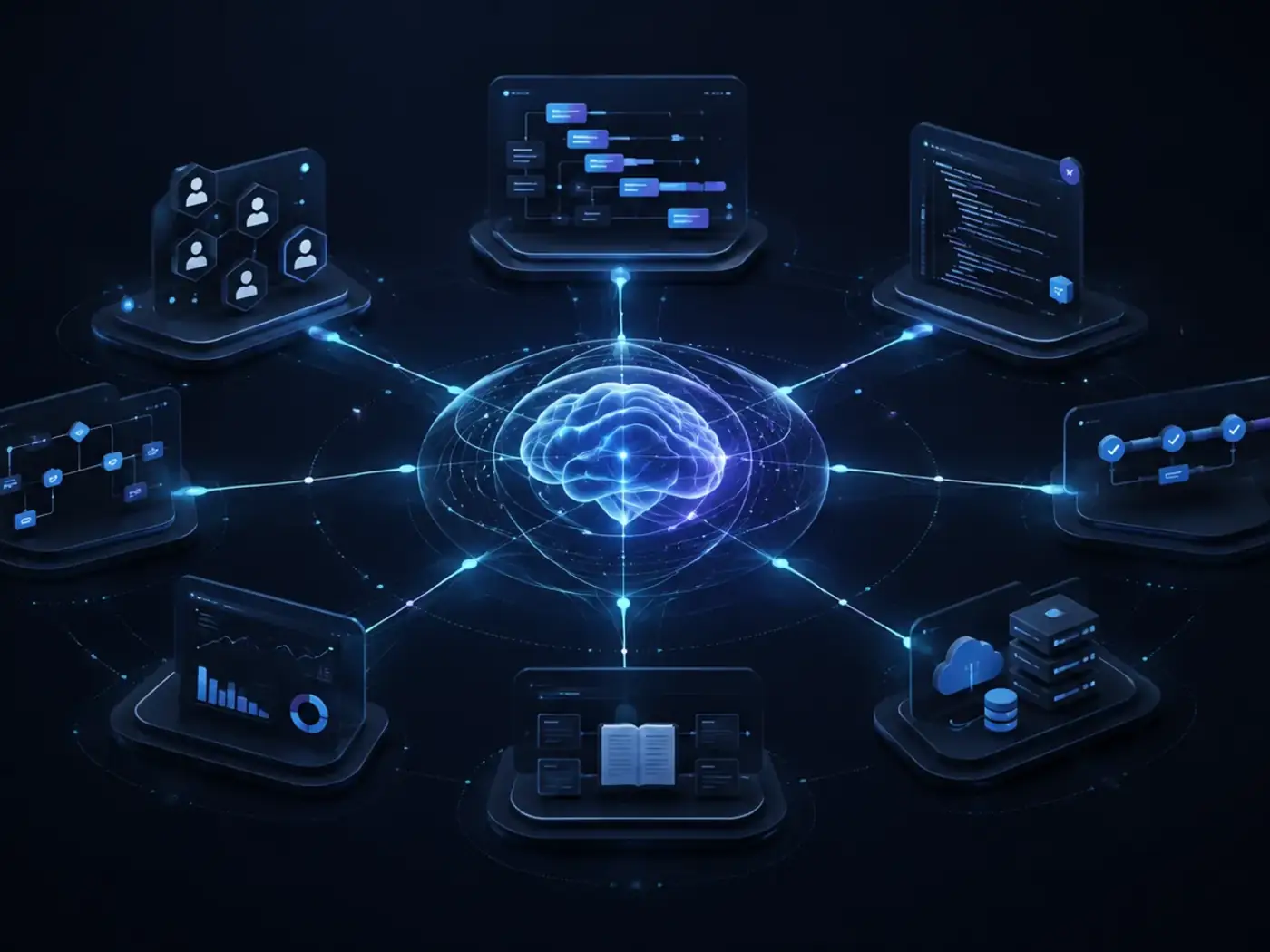
AI Operations means connecting models to the workflows, documents and systems a team already uses. Reotech builds controlled systems for document intake, classification, extraction and routing. Deterministic software handles known rules, people retain authority over sensitive decisions, and each model action can be reviewed.
We help operations teams across Europe and beyond design AI systems that stay close to the work:
- automate repetitive work;
- understand business information;
- classify incoming requests and documents;
- extract structured data from unstructured information;
- route work to the right team or system;
- keep people responsible for decisions that need judgment.
The result is not a chatbot bolted onto the side of the business. It is a controlled workflow that can be observed, reviewed and improved.
Start with the workflow, not the hardware
Before choosing a model or a machine, we map the operation:
- What data is being processed, and what must remain private?
- Which steps are deterministic, and which genuinely need a model?
- Where should a person review, correct or approve the result?
- What needs to be logged, retried, measured and maintained?
That usually leads to a focused system: a private model service, an extraction or classification layer, explicit routing rules, and a review interface for exceptions. The architecture can start small and become more capable as the workflow proves its value.
Three practical deployment paths
Where the model runs is a business decision before it is a technical one:
- A local workstation — a compact machine under your direct control. Makes sense for focused workflows and teams that value simplicity.
- A purpose-built AI appliance — pre-integrated hardware and tooling, useful when CUDA compatibility matters and the team shouldn’t assemble infrastructure itself.
- Custom GPU infrastructure — more control over networking, storage and isolation, plus more operational responsibility.
Whichever path fits, it still needs proper access control, backups, monitoring, explicit data boundaries, and a recovery plan. The hardware is selected after the workflow is mapped — never before.
Automation still needs boundaries
A useful AI system makes its boundaries explicit:
- sensitive data stays in the agreed environment;
- model output is validated before it changes a business process;
- uncertain cases go to a human reviewer;
- prompts, inputs, outputs and decisions can be traced;
- failures are visible instead of silently becoming bad data.
This is the difference between a local demo and a system an operations team can trust.
Our Reo Brain case study is internal proof of this pattern: local processing on infrastructure we control, events connected to the context of the work, and human control working together as one operational flow.
A clear path from experiment to system
We can begin with one valuable workflow—such as document intake, request classification or structured extraction—then measure where automation helps and where people should remain in control.
From there, Reotech can help shape the model layer, connect it to your existing systems, build the review experience and establish the operating practices around it.
The hardware is selected after those decisions. Sometimes that is a workstation. Sometimes it is an appliance. Sometimes it is custom infrastructure. The goal is the same: AI that makes a real operation faster, clearer and more dependable.
If you are evaluating an AI workflow, show us how the work moves today.